Where to stay in Dublin: the best areas for your trip
Ideal for: CouplesFamiliesOn a budgetSoloSeniors
Contents
In short: for a first visit, stay in the centre, between Temple Bar and Grafton Street. As a couple or for calm, Georgian Dublin; for local life, Smithfield and Stoneybatter; with kids, Ballsbridge. Dublin is compact, but accommodation is in high demand: book early.
Understanding Dublin in two minutes
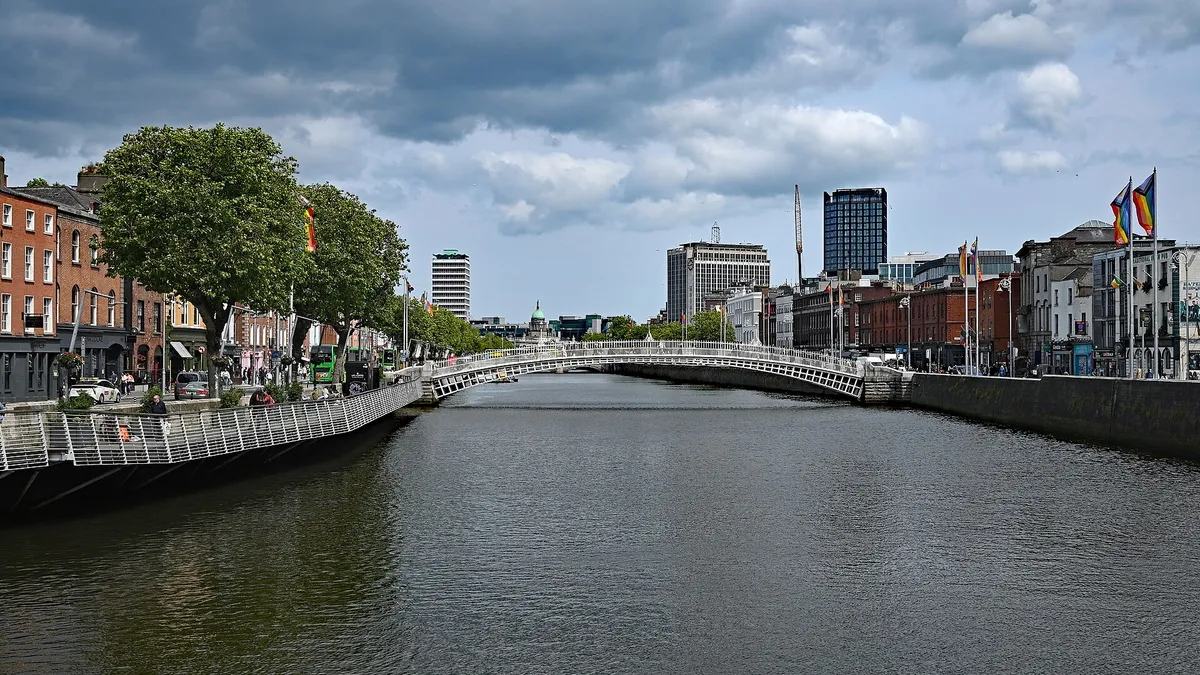
Dublin is divided by the Liffey. On the south bank is the centre, with Temple Bar, Trinity College, Grafton Street and Georgian Dublin around St Stephen’s Green; further south-east, Ballsbridge. On the north bank is O’Connell Street, then Smithfield and Stoneybatter to the west. To the east are the modern Docklands. The tram (Luas), buses and the commuter train (DART) complement walking.
The right area for your trip
First visit and nightlife: Temple Bar and the centre
Cobbled streets, pubs and traditional music: Temple Bar is Dublin’s festive soul, a stone’s throw from Trinity College, the castle and Grafton Street. Very lively at night: choose a slightly quieter street if you want to sleep.
Elegance and calm: Georgian Dublin
Around St Stephen’s Green and Merrion Square: Georgian houses with colourful doors, national museums and parks. An elegant, calm area, ideal for couples and older travellers.
Local life: Smithfield and Stoneybatter
North-west of the Liffey, Smithfield and Stoneybatter are more local, with cafés, neighbourhood pubs and the old Bow Street distillery.
With kids and calm: Ballsbridge
The embassy district, Ballsbridge is residential, quiet and green, well connected to the centre by bus and DART.
Modern: the Docklands
Along the Liffey to the east, the Docklands have newer hotels near the convention centre, handy for business trips.
More affordable: Rathmines and Portobello
South of the centre, Rathmines and Portobello are lively and often a little more affordable, a few minutes by bus from St Stephen’s Green.
Getting to Dublin
From Dublin Airport, express and city buses run to the centre; there is no direct train. For timetables and fares, check the official websites. A private transfer takes you straight to your hotel.
Our booking tips
- Book very early: supply is limited and prices rise fast.
- Check the calendar: St Patrick’s Day (17 March), big matches and concerts fill the city.
- Get a Leap Card for public transport, cheaper than single tickets.
- Check the nearest Luas, DART or bus stop if you stay outside the centre.
- Choose free cancellation when it is offered.
Once you’re there
To plan the rest of your trip (Galway, the Cliffs of Moher, Connemara), see our guide Travel in Ireland. The areas and useful services are on our Dublin page.
Frequently asked questions
What is the best area to stay in Dublin?
The centre, around Temple Bar and Grafton Street, for a first visit: everything is on foot. Georgian Dublin, around St Stephen's Green, is more elegant and quieter.
Is accommodation expensive in Dublin?
Supply is limited and demand is high: book as early as possible, especially for summer, St Patrick's Day and big matches or concerts. Slightly outlying but well-connected areas are often more affordable.
Is Temple Bar noisy?
Yes, it's the pub district, very lively until late, especially at weekends. If you are a light sleeper, choose a nearby street or Georgian Dublin.
Related articles
Dublin airport to the city centre: express coach, bus or taxi
How to get from Dublin airport to the city centre: express coaches (Dublin Express, Aircoach), city buses 16 and 41, taxi or booked transfer, plus our tips.
Things to do in Dublin: the must-sees and our tips
What to see and do in Dublin: the Book of Kells, Temple Bar, the castle, Guinness Storehouse, Kilmainham Gaol, and trips to Howth and Glendalough.

Where to stay in Cairo: the best areas for your trip
Zamalek, downtown, the Nile banks or near the Giza pyramids: where to stay in Cairo for your trip, and our tips for booking well.