Travel in Ireland: the complete practical guide
Contents
In short: Ireland means Dublin, its pubs and music, then the wild west coast around Galway. The country uses the euro but is not in the Schengen area. For the countryside and the coast, a car is ideal: you drive on the left.
- FlightsCompare
- HotelsBooking.com (partner link, opens in a new tab)
- Car hireAutoEurope (partner link, opens in a new tab)
- eSIMCompare
- ToursTiqets (partner link, opens in a new tab)
- AirportWelcome Pickups (partner link, opens in a new tab)
- LuggageRadical Storage (partner link, opens in a new tab)
- Flight delayAirHelp (partner link, opens in a new tab)
When to go to Ireland
- May to September: the longest days and the mildest weather.
- March: St Patrick’s Day (the 17th), the big national celebration, especially in Dublin.
- All year round: rain can fall at any time; bring a waterproof jacket.
Entry requirements
Ireland is part of the European Union, but not the Schengen area.
- EU citizens: a valid ID card or passport. There is a check on arrival.
- Other travellers: a passport and, depending on nationality, an Irish visa. The European Entry/Exit System (EES) does not apply in Ireland.
Check the rules that apply to you on official websites before you go.
Arriving in Ireland
- Dublin: no train from the airport; express coaches reach the centre in 20 to 40 minutes.
- Shannon and Cork: two other airports, handy for the west and the south.
- By sea: ferries link France and the United Kingdom with Ireland.
Getting around Ireland
- A car is the best way to discover the west coast (Wild Atlantic Way), Connemara or Kerry. You drive on the left and minor roads are narrow.
- Trains and coaches link Dublin with the main cities: Galway is about 2 hours 20 to 2 hours 30 minutes from Dublin by train.
- Organised day tours from Dublin or Galway save you the driving.
Money, internet and practicalities
- Currency: the euro (the pound sterling in Northern Ireland). Cards are accepted almost everywhere, even for small amounts.
- Internet: Ireland is in the EU: EU mobile plans usually work there at no extra cost. Outside the EU, a travel eSIM is the simplest option.
- Electricity: type G three-pin sockets; bring an adapter.
What to see in Ireland
- Dublin: Trinity College and the Book of Kells, Temple Bar, the castle and the Guinness Storehouse.
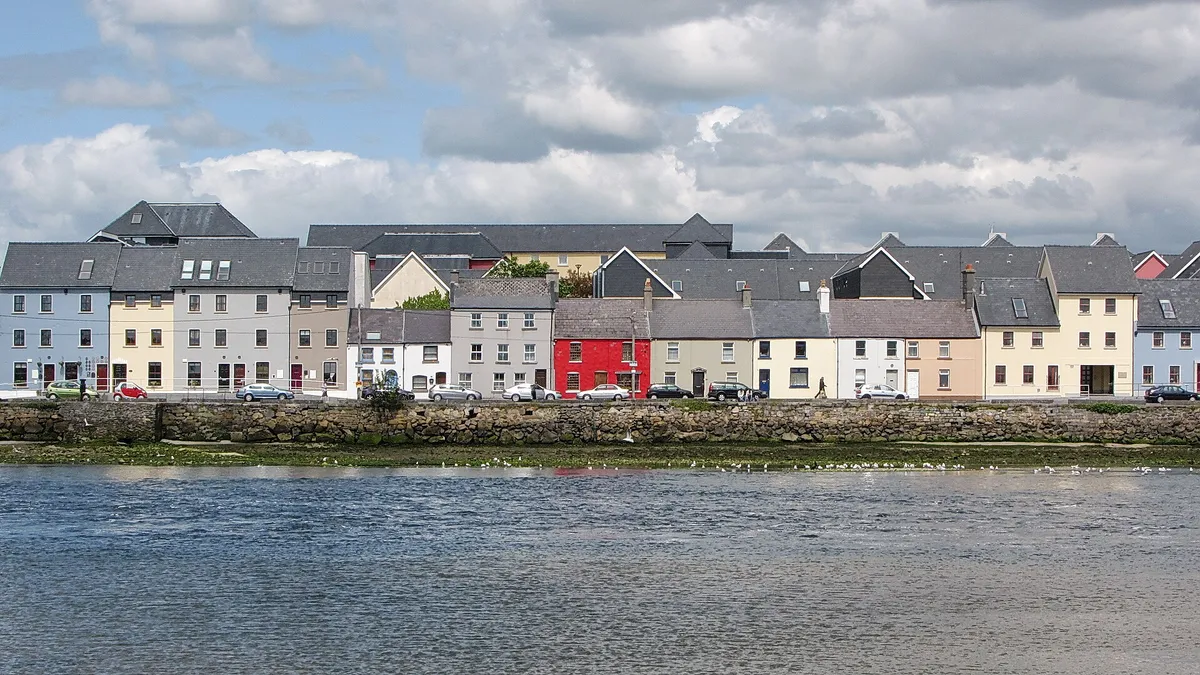
- Galway: the Latin Quarter, live music, and the gateway to Connemara.
- The west coast: the Cliffs of Moher, the Burren, the Aran Islands and Connemara.
- And also: the Ring of Kerry and Killarney, Cork, Kilkenny, and the Giant’s Causeway in Northern Ireland.
Suggested itineraries
7 days: Dublin (3 days), then Galway (2 days) with the Cliffs of Moher, and a day in Connemara.
10 to 14 days: add Kerry and Killarney, then Cork, by car.
Where to stay in Ireland
Our Dublin and Galway pages present the best areas for your travel style. In the countryside, B&Bs are a lovely way to meet locals.
Frequently asked questions
Do I need a passport for Ireland?
EU citizens can enter with a valid ID card or passport. Ireland is not part of the Schengen area: there is an ID check on arrival, and the European Entry/Exit System (EES) does not apply there. Other travellers should check Irish rules for their nationality.
How do I get from Dublin Airport to the centre?
The airport has no rail link: express coaches (Dublin Express, Aircoach) and city buses reach the centre in 20 to 40 minutes depending on traffic.
Do you drive on the left in Ireland?
Yes, Ireland drives on the left, like the United Kingdom. Country roads are often narrow: allow more time than your GPS suggests.
Can I visit Northern Ireland from Ireland?
Yes, the border can be crossed freely by car or train. Northern Ireland is part of the United Kingdom: the currency is the pound sterling, and the UK requires an Electronic Travel Authorisation (ETA) from most foreign visitors. Check your situation before you go.
Related articles
Travel in Australia: the complete practical guide
Plan a trip to Australia: when to go, the eVisitor, airports, driving on the left, distances, what to see from Sydney to Melbourne and itineraries.
Travel in Belgium: the complete practical guide
Plan a trip to Belgium: when to go, entry rules, airports, trains, low emission zones, what to see from Brussels to Bruges and itineraries.

Travel in Brazil: the complete practical guide
Plan a trip to Brazil: when to go, entry rules, airports, transport, money, what to see from Rio de Janeiro to São Paulo and itineraries.