Travel in Spain: the complete practical guide
Ideal for: CouplesFamiliesSoloOn a budgetRoad trip
Contents
In short: Spain is best discovered city by city thanks to an excellent high-speed rail network: Barcelona for Gaudí and the sea, Madrid for its museums and nightlife, Seville and Andalusia for Moorish heritage. Book the most popular sights ahead, and adapt to the Spanish rhythm: lunch and dinner are late.
- FlightsCompare
- HotelsBooking.com (partner link, opens in a new tab)
- Car hireAutoEurope (partner link, opens in a new tab)
- eSIMCompare
- ToursTiqets (partner link, opens in a new tab)
- AirportWelcome Pickups (partner link, opens in a new tab)
- LuggageRadical Storage (partner link, opens in a new tab)
- Flight delayAirHelp (partner link, opens in a new tab)
When to go to Spain
- Spring (April to June) and autumn (September to November): the best time, especially for Andalusia and Madrid.
- Summer: ideal for beaches, but very hot in the south and centre (Seville, Madrid). Sightsee early in the morning and in the evening.
- Winter: mild on the Mediterranean coast and in Andalusia, cooler in Madrid; few crowds in museums.
Entry requirements
Spain is part of the European Union and the Schengen area. EU citizens travel with a valid ID card or passport. Other travellers need a passport and, depending on nationality, a visa; the European Entry/Exit System (EES) has registered non-EU travellers since April 2026, and the ETIAS authorisation is announced for late 2026.
Arriving in Spain
- Barcelona El Prat: the Aerobús reaches Plaça de Catalunya in about 35 minutes, day and night; the metro (line 9 South) and the train are other options.
- Madrid Barajas: metro line 8 links all terminals to Nuevos Ministerios, and an express bus runs to Atocha station.
- Seville: the EA bus links the airport to the centre and the stations.
Getting around Spain
- High-speed trains link Madrid with Barcelona, Seville, Malaga, Valencia and Cordoba. Several companies share the main lines (Renfe with the AVE, Iryo, Ouigo), so compare.
- A car is ideal for Andalusia (white villages, coast) or the northern regions, but useless in big cities, where parking is hard.
- In town, the Madrid and Barcelona metros are fast and easy to use.
Booking the major sights
- Barcelona: the Sagrada Família (dated ticket with time slot) and Park Güell’s monumental zone must be booked, often several days ahead.
- Seville: the Alcázar and the cathedral; Granada: the Alhambra, to book well in advance.
- Madrid: the Prado, the Reina Sofía and the Thyssen; the Prado is free during its last two opening hours.
Money, internet and practicalities
- Currency: the euro. Cards are very widely accepted.
- Tourist tax: some regions and cities charge one, notably Catalonia and Barcelona, where it rose in 2026.
- Internet: EU mobile plans usually work at no extra cost. Outside the EU, a travel eSIM is the simplest option.
- Hours: lunch is often around 2pm and dinner from 9pm; many shops close in the early afternoon outside the big cities.
- Stay alert: in crowded places and on public transport in Barcelona and Madrid, keep an eye on your belongings.
What to see in Spain
- Barcelona: the Sagrada Família, Park Güell, the Gothic Quarter, Barceloneta.
- Madrid: the Prado, the Royal Palace, Plaza Mayor, Retiro Park.
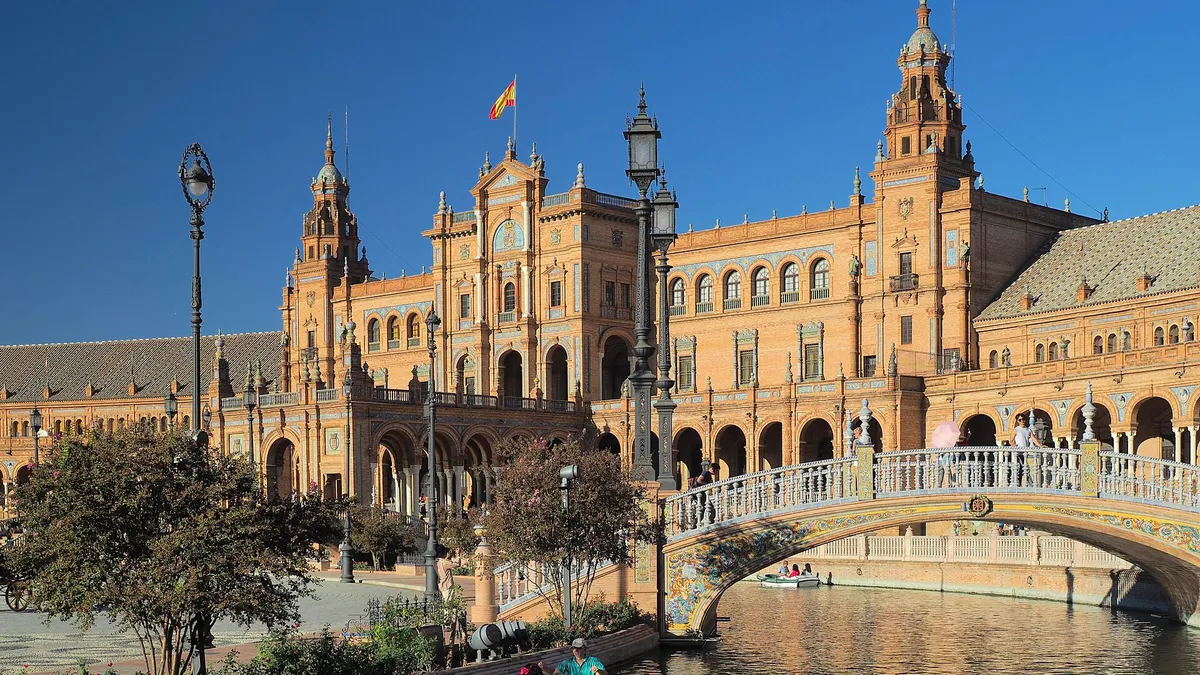
- Seville: the Alcázar, the cathedral and the Giralda, Plaza de España, Triana.
- Andalusia: Granada and the Alhambra, Cordoba and its Mosque-Cathedral, the white villages, Malaga.
- And also: Toledo and Segovia near Madrid, Valencia, the Basque Country (San Sebastián, Bilbao), the Balearic and Canary Islands.
Suggested itineraries
7 days: 3 days in Barcelona, then the train to Madrid (2 days, with a day trip to Toledo), and 2 days in Seville.
10 days: add Cordoba and Granada for a full tour of Andalusia.
Where to stay in Spain
Stay in a central, well-connected area: our Barcelona, Madrid and Seville pages present the best areas for your travel style. In summer in Seville and Madrid, air conditioning is essential.
Frequently asked questions
How do I get from Barcelona airport to the centre?
The Aerobús links the terminals to Plaça de Catalunya in about 35 minutes, day and night. The metro (line 9 South, with a change), the train and taxis are other options.
Do I need to book the Sagrada Família in advance?
Yes: entry is only with a dated ticket and a time slot, often sold out several days ahead. Park Güell's monumental zone, the Alcázar in Seville and the Alhambra in Granada also require booking.
How do I travel between Madrid, Barcelona and Seville?
High-speed trains are the most convenient: several companies (Renfe with the AVE, Iryo, Ouigo) link Madrid with Barcelona and Seville in about 2h30 on the fastest services, centre to centre.
Is there a tourist tax in Spain?
Some regions and cities charge one, especially Catalonia (including Barcelona), where it was increased in 2026. It is added per person per night, often paid at the accommodation.
Is the Prado Museum free?
The permanent collection is free during the last two opening hours: 6pm to 8pm Monday to Saturday, and 5pm to 7pm on Sundays and public holidays. There is often a queue.
Related articles
Travel in Australia: the complete practical guide
Plan a trip to Australia: when to go, the eVisitor, airports, driving on the left, distances, what to see from Sydney to Melbourne and itineraries.
Travel in Belgium: the complete practical guide
Plan a trip to Belgium: when to go, entry rules, airports, trains, low emission zones, what to see from Brussels to Bruges and itineraries.

Travel in Brazil: the complete practical guide
Plan a trip to Brazil: when to go, entry rules, airports, transport, money, what to see from Rio de Janeiro to São Paulo and itineraries.