Where to stay in Seville: the best areas for your trip
Ideal for: CouplesFamiliesOn a budgetSoloSeniors
Contents
In short: for a first visit, stay in Santa Cruz or El Arenal, at the foot of the cathedral. For authenticity and flamenco, Triana; on a tighter budget and for an alternative vibe, the Alameda. Seville is walkable, but very hot in summer: air conditioning, and ideally a pool, are precious.
Understanding Seville in two minutes
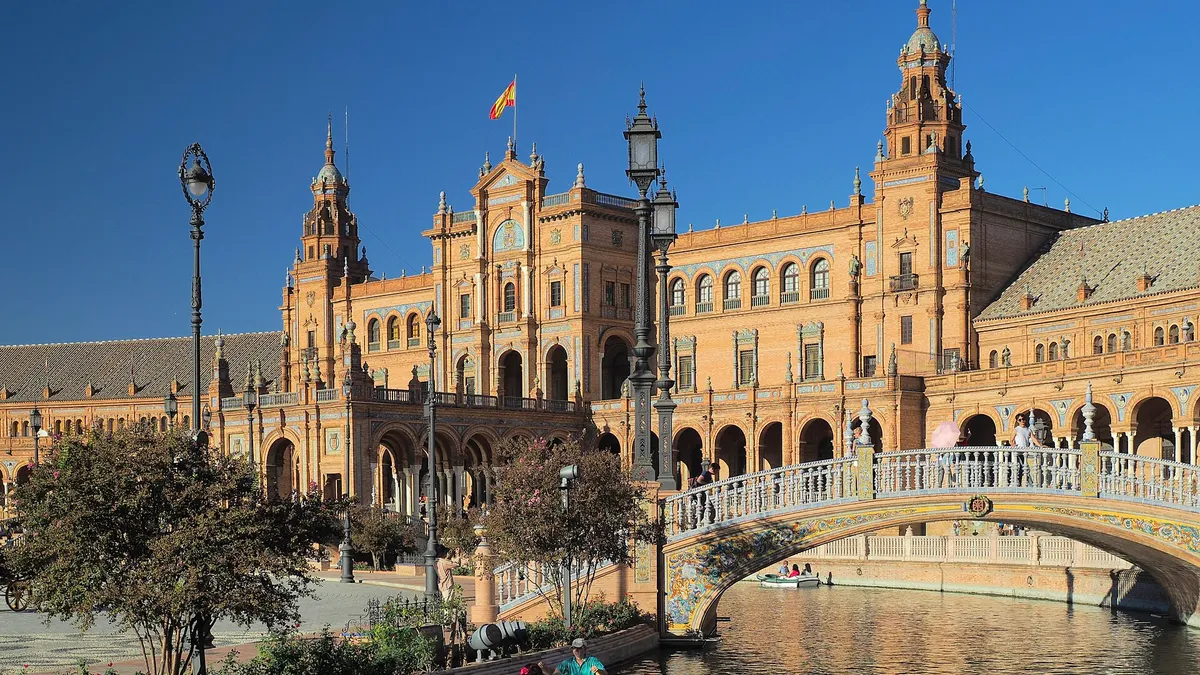
Seville’s historic centre lies on the east bank of the Guadalquivir. To the south is Santa Cruz, the old Jewish quarter, around the cathedral, the Giralda and the Alcázar. To the west, El Arenal, between the cathedral, the bullring and the river. To the north, the shopping Centro and the Metropol Parasol (“Las Setas”), then the Alameda and La Macarena. Across the river lies Triana. Plaza de España and María Luisa Park are south of the centre.
The right area for your trip
First visit: Santa Cruz
Whitewashed lanes, flower-filled patios and little squares: Santa Cruz is the most charming area, at the foot of the cathedral and the Alcázar. Very touristy by day, it becomes magical in the evening.
Central and practical: El Arenal
Between the cathedral, the Maestranza bullring and the river, El Arenal is just as central as Santa Cruz, with renowned tapas bars and wider streets.
Authenticity and flamenco: Triana
Across the Isabel II bridge, Triana is the cradle of flamenco and Sevillian ceramics, with its market, neighbourhood bars and views of the city. More local, a few minutes’ walk from the centre.
Shopping: the Centro
Around the pedestrian shopping streets and the Metropol Parasol, the Centro is practical, busy by day and well placed between the main sights.
Budget and alternative vibe: the Alameda
Around the Alameda de Hércules, a large square lined with bars and terraces, the area is young and lively, with accommodation that is often more affordable.
Local life: La Macarena
Further north, around the Macarena basilica and the old walls, a working-class, authentic area, quieter and further from the main sights.
Getting to Seville
From Seville airport, a bus runs to the centre. High-speed trains arrive at Santa Justa station. For timetables and fares, check the official websites. A private transfer takes you straight to your hotel, handy in the narrow streets of the centre.
Our booking tips
- Book months ahead for Holy Week and the Feria de Abril, in spring.
- Check for air conditioning and, in summer, a pool or a shaded terrace.
- Visit in spring or autumn: temperatures are far more pleasant than in mid-summer.
- Check access: many streets in the centre are pedestrianised or narrow.
- Choose free cancellation when it is offered.
Once you’re there
Book the Alcázar and the cathedral ahead, and see our guide Things to do in Seville. For the rest of your trip, see our guide Travel in Spain; the areas and useful services are on our Seville page.
Frequently asked questions
What is the best area to stay in Seville?
Santa Cruz, at the foot of the cathedral and the Alcázar, for a first visit; El Arenal, between the cathedral and the river, is just as central. Triana, across the Guadalquivir, is more authentic.
When should I book for Holy Week and the Seville Fair?
Several months ahead: Holy Week (in spring) and the Feria de Abril draw huge crowds, and accommodation is scarce and more expensive then.
Do I need a pool in Seville?
In summer, it's a real bonus: Seville is one of the hottest cities in Europe in July and August. Air conditioning is essential.
Related articles
Seville in 3 days: our day-by-day itinerary
What to see in Seville in 3 days: a day-by-day itinerary, from the Real Alcázar to the cathedral, Santa Cruz, Plaza de España, Triana and flamenco.
Things to do in Seville: the must-sees and our tips
What to see in Seville: the Alcázar, the cathedral and Giralda, Plaza de España, Santa Cruz, Triana, flamenco, Las Setas and Andalusia day trips.
Where to stay in Barcelona: the best areas for your trip
Gothic Quarter, El Born, Eixample, Gràcia, Barceloneta, Poblenou: where to stay in Barcelona for your travel style, near the beach or the centre.