Travel in Réunion: the complete practical guide
Contents
In short: Réunion means the volcano, the cirques and some of the world’s finest hiking, with a lagoon on the west coast. A car is almost essential. The currency is the euro, but the island is outside the Schengen area. For swimming, stay in the lagoon or supervised areas.
- FlightsCompare
- HotelsBooking.com (partner link, opens in a new tab)
- eSIMCompare
- AirportKiwitaxi (partner link, opens in a new tab)
- LuggageRadical Storage (partner link, opens in a new tab)
- Flight delayAirHelp (partner link, opens in a new tab)
When to go to Réunion
- May to November (southern winter): drier and cooler, the best time for hiking.
- December to April (southern summer): hot and humid, with the cyclone season, especially from January to March.
- All year round: it is cooler in the highlands; bring a fleece for the volcano and the cirques.
Entry requirements
Réunion is a French department and region, in the European Union, but outside the Schengen area.
- French and other EU citizens: a valid ID card or passport.
- Other travellers: a Schengen visa may not be enough; check the rules specific to Réunion for your nationality.
Arriving in Réunion
- Roland Garros airport (Sainte-Marie): about fifteen minutes’ drive from central Saint-Denis; shuttles and taxis. This is the airport for flights from mainland France.
- Pierrefonds airport (near Saint-Pierre): a few regional flights, including to Mauritius.
Getting around Réunion
- A car is almost essential. Mountain roads (to Cilaos, Salazie or the volcano) are winding: allow plenty of time.
- Car Jaune buses link the island’s main towns.
- The Mafate cirque can only be reached on foot (or by helicopter): you stay in mountain lodges, to be booked in advance.
Money, internet and practicalities
- Currency: the euro. Cards are accepted in most shops; keep some cash for markets and mountain lodges.
- Internet: French and other EU plans usually work there at no extra cost, subject to fair use.
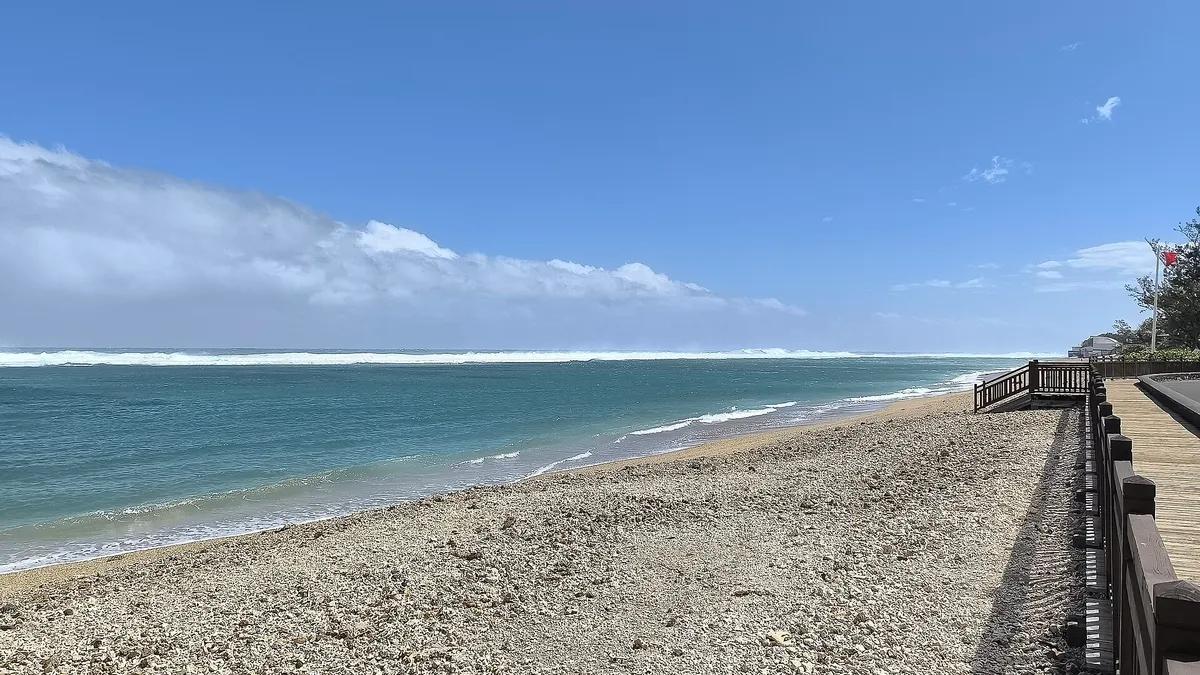
- Swimming: only in the lagoon and supervised areas (shark risk).
What to see in Réunion
- Saint-Denis: the Barachois, Rue de Paris and its Creole houses.
- Saint-Pierre: the lagoon, the market and the gateway to the wild south.
- Piton de la Fournaise, one of the world’s most active volcanoes.
- The cirques of Cilaos, Salazie (Hell-Bourg) and Mafate, and Piton des Neiges.
- The lagoon at Saint-Gilles and L’Hermitage, on the west coast.
- These “pitons, cirques and remparts” are a UNESCO World Heritage site.
Suggested itineraries
7 days: Saint-Denis (1 day), Salazie (1 day), Cilaos (2 days), the volcano (1 day) and the Saint-Gilles lagoon (2 days).
10 to 14 days: add a multi-day hike in Mafate, the wild south and Saint-Pierre.
Where to stay in Réunion
Move between regions: the west coast for the lagoon, the cirques for hiking, the south for the volcano. Our Saint-Denis and Saint-Pierre pages present the best areas for your travel style.
Frequently asked questions
Do I need a passport for Réunion?
French and other EU citizens can travel with a valid ID card or passport. Réunion is a French department, but it is not part of the Schengen area: there are checks between the island and mainland France, and non-EU travellers should check the rules specific to Réunion.
Can I swim anywhere in Réunion?
No: because of the shark risk, a prefectoral order bans swimming and activities such as surfing within 300 metres of the shore, except in the lagoon and in designated, supervised areas. Always follow the signs and flags.
Does my mobile plan work in Réunion?
Réunion is an outermost region of the European Union: French and other EU plans usually work there under the same conditions as at home, subject to fair use limits. Check with your operator.
Do I need a car in Réunion?
It is almost essential to explore the island: the cirques, the volcano and the wild south are hard to reach otherwise. Buses (Car Jaune) link the towns, but with less flexibility.
Related articles
Travel in Australia: the complete practical guide
Plan a trip to Australia: when to go, the eVisitor, airports, driving on the left, distances, what to see from Sydney to Melbourne and itineraries.
Travel in Belgium: the complete practical guide
Plan a trip to Belgium: when to go, entry rules, airports, trains, low emission zones, what to see from Brussels to Bruges and itineraries.
Travel in Brazil: the complete practical guide
Plan a trip to Brazil: when to go, entry rules, airports, transport, money, what to see from Rio de Janeiro to São Paulo and itineraries.