Travel in Guadeloupe: the complete practical guide
Ideal for: FamiliesCouplesRoad tripSeniors
Choose “Save as PDF” to keep it offline.
Contents
In short: Guadeloupe is a butterfly-shaped Caribbean archipelago: Grande-Terre for beaches and lagoons, Basse-Terre for rainforest and La Soufrière, plus the islands of Marie-Galante, Les Saintes and La Désirade. The currency is the euro and French citizens only need an ID card, but the archipelago is outside the Schengen area.
When to go to Guadeloupe
- December to May: the dry season (carême), the best time.
- June to November: the hivernage, hotter, more humid and rainier; it is also hurricane season.
- Carnival, before Lent, livens up the towns, usually in February or March.
Entry requirements
- French citizens: a valid ID card or passport is enough. A passport is needed to visit neighbouring foreign islands.
- Other nationalities: Guadeloupe is in the European Union but outside the Schengen area; check the entry rules for your nationality.
Arriving in Guadeloupe
Guadeloupe Pôle Caraïbes Airport is in Les Abymes, a few kilometres from Pointe-à-Pitre. Karu’lis buses link the airport with the town centre during the day and taxis are available around the clock; most visitors hire a car on arrival.
Getting around Guadeloupe
- A car is essential to make the most of the two main islands.
- Ferries link Guadeloupe with Marie-Galante, Les Saintes and La Désirade.
- Buses serve the main towns but are impractical for beaches and trails.
Money, internet and practicalities
- Currency: the euro. Cards are accepted almost everywhere; bring a little cash for markets and the smaller islands.
- Mobile: Guadeloupe is part of the EU; check with your provider what your plan includes there.
- Languages: French and Guadeloupean Creole.
- Electricity: type C and E plugs, 230 V. Time: UTC−4, no daylight saving.
What to see in Guadeloupe
- Pointe-à-Pitre: the Mémorial ACTe, the market and Place de la Victoire.
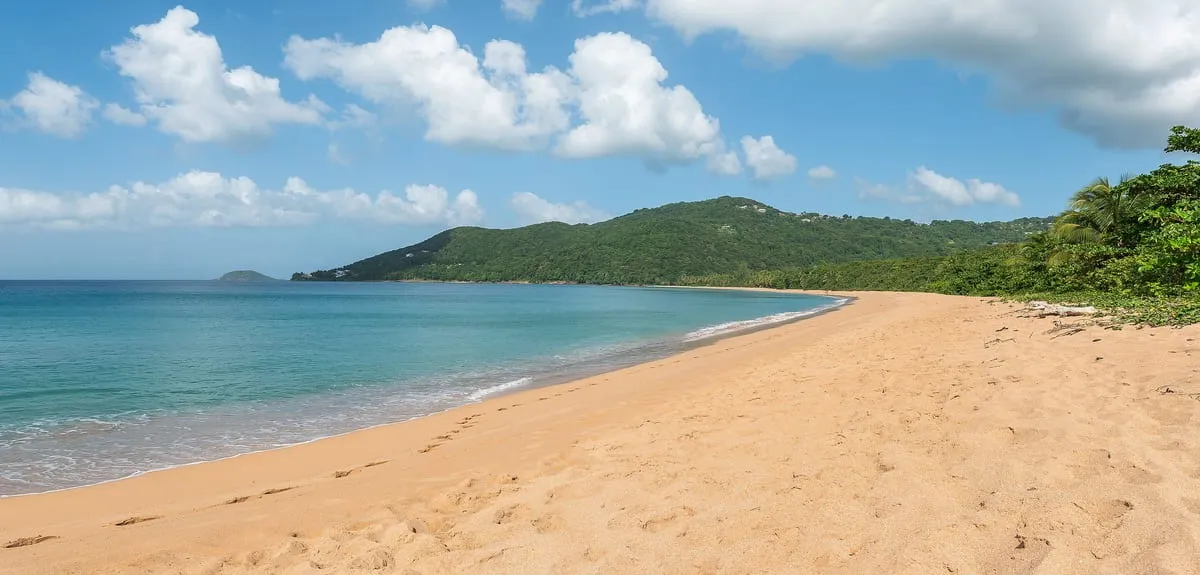
- Grande-Terre: the beaches of Le Gosier, Sainte-Anne and Saint-François, Pointe des Châteaux and the Porte d’Enfer.
- Basse-Terre: La Soufrière, Guadeloupe National Park, the Carbet Falls, the Route de la Traversée and Deshaies.
- The Cousteau Reserve, around the Pigeon Islands, for snorkelling and diving.
- Les Saintes (Terre-de-Haut) and its bay, and Marie-Galante and its beaches, as day trips or for a few nights.
Suggested itineraries
1 week: Grande-Terre (beaches, Pointe des Châteaux), then Basse-Terre (Deshaies, the Cousteau Reserve, the Carbet Falls).
2 weeks: Grande-Terre, Basse-Terre, then a few nights on Les Saintes or Marie-Galante.
What to eat in Guadeloupe
- Bokit, a fried-bread sandwich, and accras;
- colombo with chicken or goat;
- seafood and grilled fish;
- coconut sorbet from beach vendors;
- rhum agricole, to be enjoyed in moderation.
Culture and etiquette
- Say “bonjour” when you walk into a shop: it matters.
- On beaches and in the forest, leave no rubbish and stay on marked trails.
- Creole is part of everyday life.
Health and safety
Protect yourself from the sun and mosquitoes. Before climbing La Soufrière, check the weather and whether the trails are open. On beaches affected by sargassum, swimming is advised against: follow local advice.
Frequently asked questions
Do I need a passport to travel to Guadeloupe?
French citizens only need a valid national ID card. Guadeloupe is part of the European Union but outside the Schengen area, so other nationalities should check their entry rules. A passport is needed for neighbouring foreign islands.
Grande-Terre or Basse-Terre?
Flat Grande-Terre has the white-sand beaches and lagoons; mountainous Basse-Terre has the rainforest, waterfalls and La Soufrière. Ideally, split your stay between the two.
When is the best time to visit Guadeloupe?
The dry season, carême, runs from December to May and is the best time. From June to November, the hivernage is wetter and is also hurricane season.
How do I get to Marie-Galante or Les Saintes?
By boat: ferries leave from Pointe-à-Pitre and Trois-Rivières, among other ports. Check timetables with the operators, especially out of season.
Related articles

Travel in Austria: the complete practical guide
Plan a trip to Austria: when to go, Vienna and Salzburg, trains and the motorway vignette, the Alps and lakes, food and 5 to 10-day itineraries.
Travel in the Czech Republic: the practical guide
Plan a trip to the Czech Republic: Prague, when to go, the airport, the Czech koruna, trains, Český Krumlov and Kutná Hora, and itineraries.
Travel in Hungary: the complete practical guide
Plan a trip to Hungary: Budapest and its thermal baths, when to go, the airport, the forint, Lake Balaton, the Danube Bend and itineraries.