Travel in Canada: the complete practical guide
Contents
In short: Montreal and Quebec City to experience French-speaking North America, Vancouver between ocean and mountains. The country is huge: choose one region per trip. When flying, remember the eTA (Electronic Travel Authorization).
- FlightsCompare
- HotelsBooking.com (partner link, opens in a new tab)
- eSIMCompare
- AirportKiwitaxi (partner link, opens in a new tab)
- LuggageRadical Storage (partner link, opens in a new tab)
- Flight delayAirHelp (partner link, opens in a new tab)
When to go to Canada
- Summer (June to September): festival season, national parks and whale watching.
- Autumn: forest colours, usually from late September to mid-October in Quebec.
- Winter: very cold, but ideal for skiing and snow activities.
Entry requirements
- Visa-exempt travellers (including most EU citizens): no visa, but an eTA is required to arrive by air. Apply online on the Government of Canada’s official website; it is valid for five years (or until the passport expires).
- Other travellers: a visitor visa depending on nationality.
Check your situation on official websites before you go.
Arriving in Canada
- Montreal: bus 747 links the airport with downtown day and night.
- Vancouver: the SkyTrain’s Canada Line reaches downtown in about 25 minutes.
- Toronto and Quebec City also have international airports.
Getting around Canada
- Flying is essential to cross the country (Montreal to Vancouver).
- Trains link Quebec City, Montreal, Ottawa and Toronto.
- A car gives freedom for national parks, the Gaspé Peninsula, Charlevoix or the Rockies.
Money, internet and practicalities
- Currency: the Canadian dollar. Cards are accepted almost everywhere.
- Tax and tipping: taxes are added to displayed prices; in restaurants, a tip of 15 to 20% is customary.
- Internet: a travel eSIM avoids roaming charges.
What to see in Canada
- Montreal: Old Montreal, Mount Royal, the Plateau and the festivals.
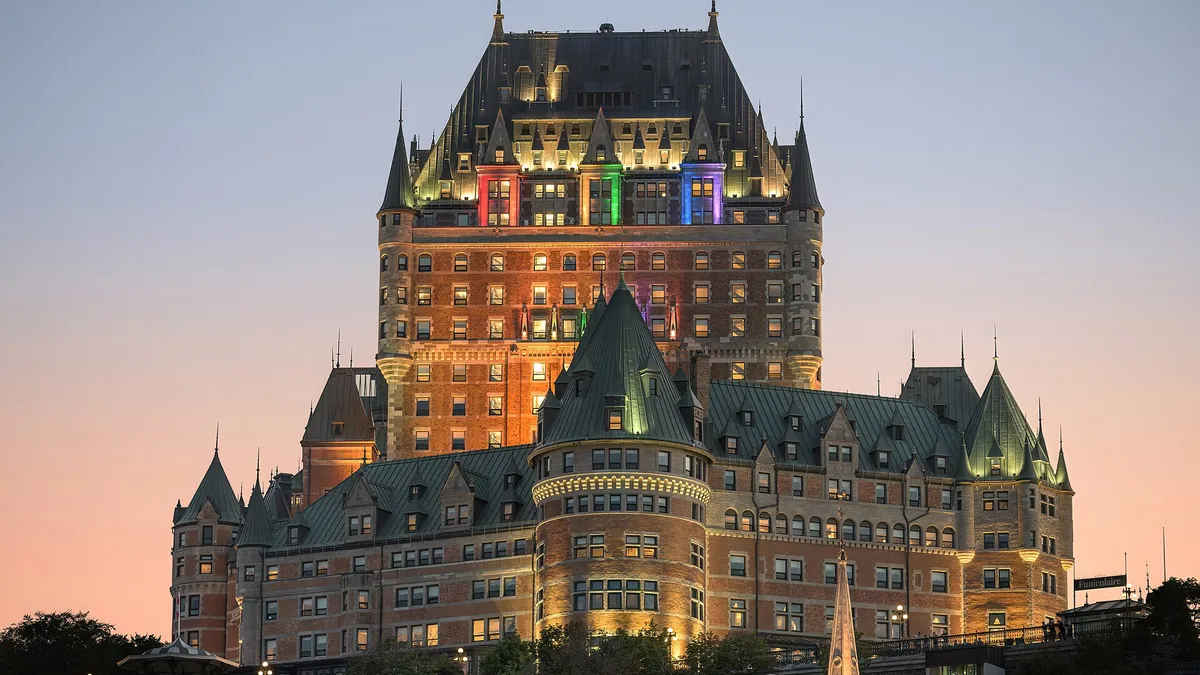
- Quebec City: UNESCO-listed Old Québec, the Château Frontenac and Montmorency Falls.
- Vancouver: Stanley Park, Granville Island and the surrounding nature.
- And also: Toronto and Niagara Falls, Ottawa, Tadoussac and its whales, the Rockies (Banff, Jasper).
Suggested itineraries
7 days: Montreal (3 days), then Quebec City (3 days) with Montmorency Falls and Île d’Orléans.
14 days: add Charlevoix and Tadoussac, or head west: Vancouver, then the Rockies.
Where to stay in Canada
Our Montreal, Quebec City and Vancouver pages present the best areas for your travel style. In summer and during festivals, book early.
Frequently asked questions
Do I need a visa for Canada?
Visa-exempt travellers (including most EU citizens) do not need a visa, but must obtain an Electronic Travel Authorization (eTA) to fly to Canada. Apply online on the Government of Canada's official website; it is valid for five years (or until the passport expires). By land, no eTA is required.
How do I get from Montreal airport to downtown?
Bus 747 runs day and night between Montréal-Trudeau airport and downtown: allow about 25 to 35 minutes to Lionel-Groulx station, longer to Berri-UQAM, depending on traffic.
Is French spoken in Canada?
Yes, in Quebec (Montreal, Quebec City), where French is the official language, and in some regions such as Acadia. Elsewhere, English dominates, as in Vancouver or Toronto.
When can I see the autumn colours in Quebec?
The forests usually change colour from late September to mid-October, depending on the region and the year.
Related articles
Travel in Australia: the complete practical guide
Plan a trip to Australia: when to go, the eVisitor, airports, driving on the left, distances, what to see from Sydney to Melbourne and itineraries.
Travel in Belgium: the complete practical guide
Plan a trip to Belgium: when to go, entry rules, airports, trains, low emission zones, what to see from Brussels to Bruges and itineraries.
Travel in Brazil: the complete practical guide
Plan a trip to Brazil: when to go, entry rules, airports, transport, money, what to see from Rio de Janeiro to São Paulo and itineraries.