Things to do in Venice: the must-sees and our tips
Contents
In short: start with St Mark’s Square, the basilica and the Doge’s Palace, ride the Grand Canal by vaporetto to the Rialto, get lost in the lanes of Dorsoduro and Cannaregio, then spend half a day on the islands of Murano and Burano. The best moments: evenings and early mornings, when the lanes empty out.
St Mark’s Square, the basilica and the Doge’s Palace
St Mark’s Square is framed by the basilica, with its domes and golden mosaics, the campanile, which offers views over the whole lagoon, and the Doge’s Palace, the former seat of power of the Venetian Republic. From the palace, you cross the Bridge of Sighs to the old prisons. Book the basilica and the palace in advance to skip the queues.
The Grand Canal and the Rialto
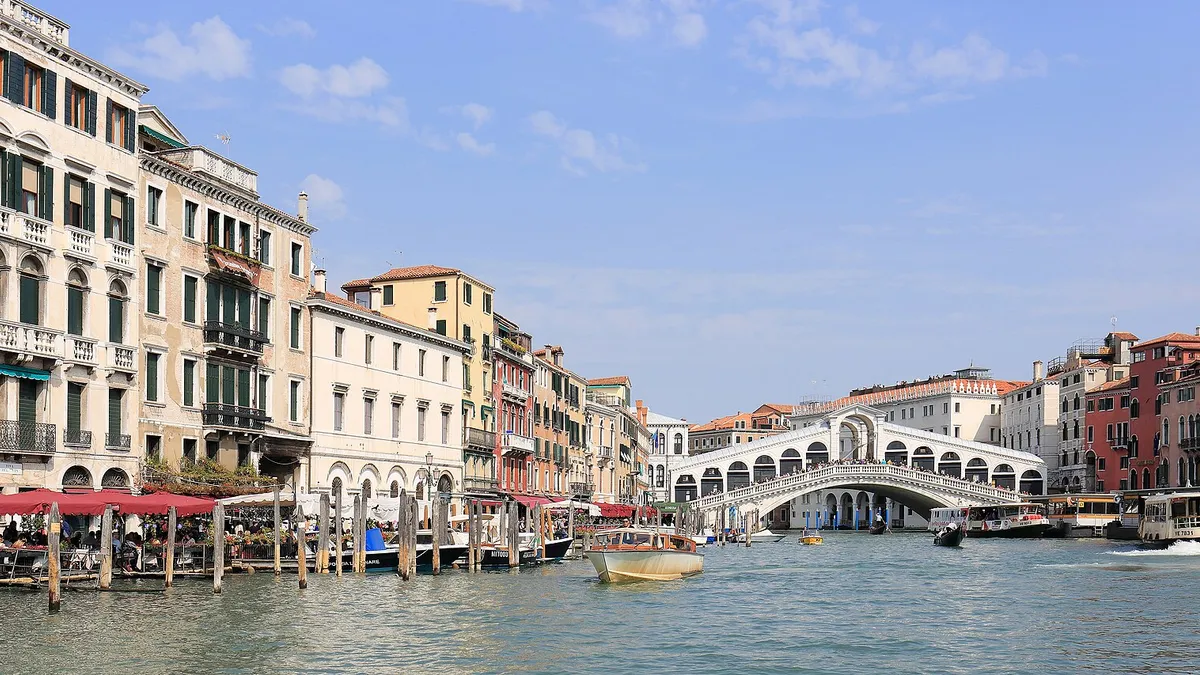
Vaporetto line 1 slowly travels the whole length of the Grand Canal, past the palaces: the best tour for a first visit. The Rialto Bridge, the city’s most famous, overlooks the Rialto market, where fish, fruit and vegetables are sold in the morning (the fish market is closed early in the week).
Dorsoduro: art and sunny quays
The Gallerie dell’Accademia brings together the great Venetian painters (Titian, Tintoretto, Veronese), and the Peggy Guggenheim Collection modern art, in a palazzo on the canal. The Santa Maria della Salute basilica watches over the mouth of the Grand Canal, and the Zattere quays are perfect for an ice cream in the sun.
Cannaregio and the Ghetto
The Ghetto, one of the oldest Jewish quarters in Europe, can be visited with its museum and synagogues. In the evening, the bacari (wine bars) of Cannaregio serve cicchetti, small Venetian bites, with a glass of wine or a spritz.
By gondola
A gondola ride remains an iconic experience, especially along the small canals. Fares are set by the city: check them and agree with the gondolier before setting off. For a simple crossing of the Grand Canal, the traghetto, a shared gondola, is a cheap alternative.
Murano, Burano and Torcello
- Murano, the island of glassblowers, with its workshops and glass museum.
- Burano, its multicoloured houses and lace-making tradition.
- Torcello, almost deserted, and its basilica with Byzantine mosaics.
Vaporettos serve the islands from Fondamente Nove.
Major events
Carnival (in February, depending on the year) fills the city with masks and costumes. The Biennale alternates between contemporary art and architecture, and the Venice Film Festival takes place on the Lido at the end of summer.
Getting around and planning
You get around on foot and by vaporetto; a multi-day transport pass quickly pays off. Get lost on purpose: it is the best way to discover Venice. In autumn and winter, acqua alta (high water) can flood some areas for a few hours: follow the forecasts.
Where to stay in Venice
San Marco for a first visit, Cannaregio for local life, Dorsoduro for calm, Mestre on a tight budget: every area is detailed in our guide Where to stay in Venice. For the rest of your trip, see Travel in Italy.
Frequently asked questions
How many days do you need in Venice?
Two to three days let you see St Mark's Square, the Doge's Palace, the Rialto and Dorsoduro, and spend half a day on Murano and Burano. Staying overnight lets you enjoy the city in the evening.
Do you have to pay to enter Venice?
On certain days of the year, day-trippers pay an access fee to enter the historic city; people staying overnight in the municipality are exempt, under conditions. Check the calendar and rules on the city's official website before your visit.
How can I cross the Grand Canal without a gondola ride?
Via the four bridges (including the Rialto), by vaporetto, or by traghetto: a shared gondola that crosses in a few minutes at certain points along the canal.