Things to do in Kyoto: the must-sees and our tips
Contents
In short: Kyoto, the former imperial capital, has hundreds of temples and shrines. Start very early at Fushimi Inari and its thousands of torii, climb up to Kiyomizu-dera, wander the lanes of Higashiyama and Gion, admire the Golden Pavilion, then spend a day in Arashiyama and its bamboo grove. Add Nara and its deer as a day trip.
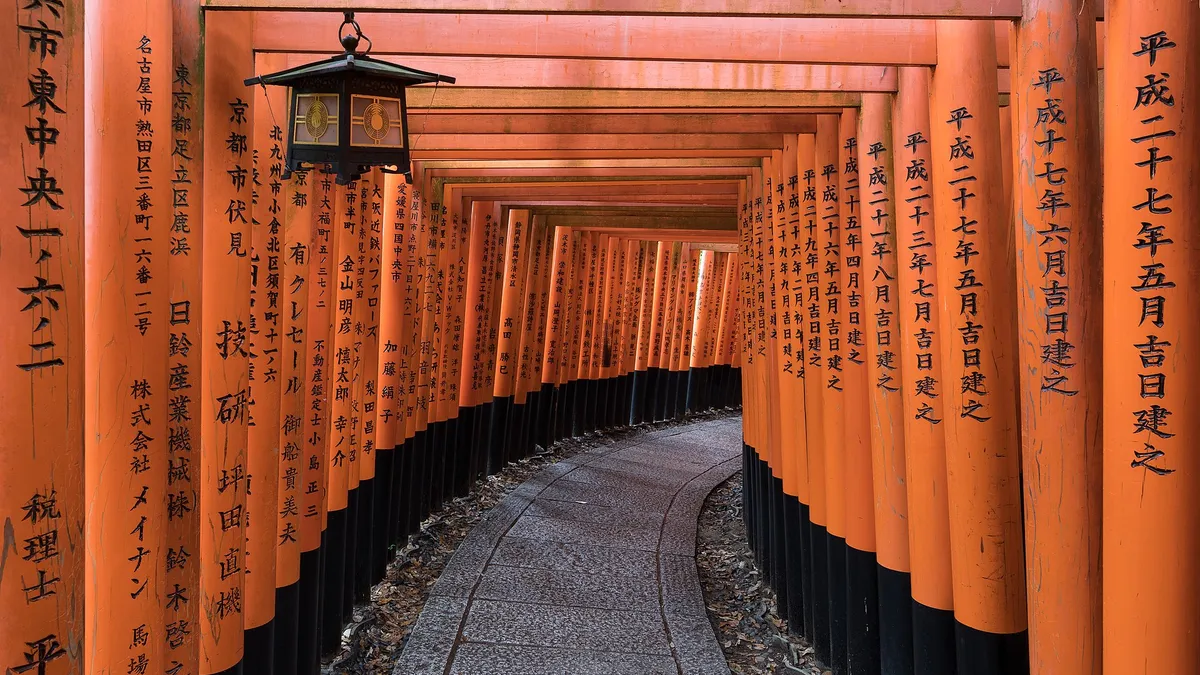
Fushimi Inari Taisha
The thousands of vermilion torii gates winding up the mountain are Kyoto’s most famous image. The shrine is open around the clock and free: come at dawn to enjoy the calm, and climb a little higher than the crowds, where the paths empty out.
Kiyomizu-dera and the Higashiyama district
Kiyomizu-dera temple and its great wooden terrace overlook the city. Walk back down through the cobbled lanes of Sannenzaka and Ninenzaka, lined with traditional houses, tea rooms and craft shops, to the Yasaka pagoda.
Gion
The district of geiko and maiko (apprentice geisha), with its wooden teahouses, is magical in the early evening, especially along Hanamikōji street and the Shirakawa canal. Respect the area: some private lanes are closed to tourists, and you should neither follow nor photograph geiko without their consent.
The Golden Pavilion and the north-west
Kinkaku-ji, a pavilion covered in gold leaf reflected in a pond, is one of the most photographed sights in Japan. Nearby, Ryōan-ji is home to the most famous Zen rock garden.
The Silver Pavilion and the Philosopher’s Path
Ginkaku-ji and its gardens, then the Philosopher’s Path, a walk along a cherry-lined canal, lead to several peaceful temples.
Arashiyama
West of the city, Arashiyama has its famous bamboo grove (best early in the morning), the Zen temple Tenryū-ji and its gardens, the Togetsukyō bridge and, on the hill, a monkey park with views over the city.
Nijō Castle and the centre
Nijō Castle, the shoguns’ residence, is famous for its “nightingale floors” that sing underfoot. In the centre, Nishiki Market is ideal for tasting Kyoto’s specialities.
Experiences to try
- A tea ceremony, to discover this codified art.
- A night in a ryokan, with a kaiseki dinner.
- Kimono rental for a stroll through Higashiyama.
Day trips from Kyoto
- Nara: its free-roaming deer and Tōdai-ji, home to a giant bronze Buddha.
- Uji: matcha tea and Byōdō-in temple.
- Osaka: its street food and castle, a few minutes away by train.
Getting around
Buses serve all the temples but are often packed; combine the subway, trains and walking, or rent a bike. Arrive by Shinkansen at Kyoto Station, or from Kansai Airport by train or private transfer.
Where to stay in Kyoto
Near the station for convenience, in Higashiyama or Gion for atmosphere: every area is detailed in our guide Where to stay in Kyoto. For the rest of your trip, see our guide Travel in Japan.
Frequently asked questions
How many days do you need in Kyoto?
Three to four days let you see the great temples (Fushimi Inari, Kiyomizu-dera, the Golden Pavilion), Gion and Arashiyama, and take a day trip to Nara.
How can I avoid the crowds in Kyoto?
Visit the most famous sites very early in the morning or late in the day. Fushimi Inari, open around the clock, is much quieter at dawn. If you can, avoid peak cherry blossom and autumn colour seasons.
Can I photograph geiko and maiko in Gion?
Be respectful: don't follow them or photograph them without their consent. Some private lanes in Gion are closed to tourists; follow the signs.
Related articles
Kyoto in 3 days: our day-by-day itinerary
What to see in Kyoto in 3 days: a day-by-day itinerary, from Fushimi Inari to Kiyomizu-dera, Gion, Arashiyama, the Golden Pavilion and the Philosopher's Path.
Where to stay in Kyoto: the best areas for your trip
Kyoto Station, Shijō-Kawaramachi, Gion and Higashiyama, Karasuma, Arashiyama: where to stay in Kyoto, in a ryokan, a machiya or a hotel.
Things to do in Tokyo: the must-sees and our tips
What to see in Tokyo: Asakusa and Sensō-ji, Shibuya, Shinjuku, Harajuku and Meiji Shrine, Ueno, Akihabara, Tsukiji, teamLab and day trips.