Staré Město (old town)
Ideal for: first visit, culture
Old Town Square and the astronomical clock, all on foot; very busy.
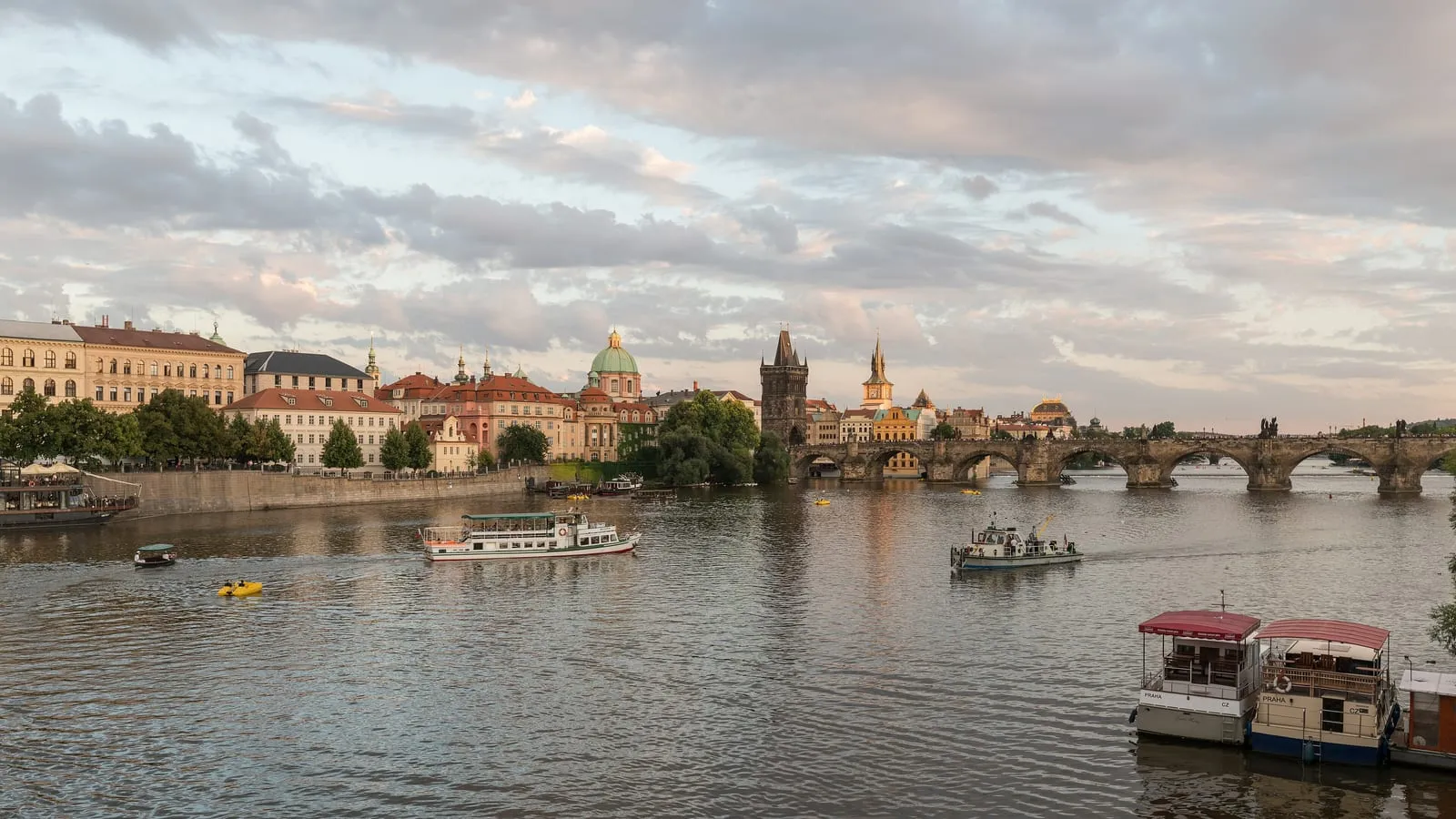
Charles Bridge, the castle and a UNESCO-listed old town on the Vltava.
First visit: where to stay
Czech Republic: the essentials
Ideal for: first visit, culture
Old Town Square and the astronomical clock, all on foot; very busy.
Ideal for: couples, quiet
Baroque lanes between Charles Bridge and the castle, calmer in the evening.
Ideal for: nightlife, longer stays
A residential area with cafés and parks, linked to the centre by metro line A.
The warmest months are July and August (average highs up to 27 °C); the coolest, January and February (average lows of -1 °C). The driest months: January and February; the wettest: June and July.
| Month | Average low and high | Rain |
|---|---|---|
| Jan | 18 mm | |
| Feb | 16 mm | |
| Mar | 26 mm | |
| Apr | 25 mm | |
| May | 58 mm | |
| Jun | 69 mm | |
| Jul | 67 mm | |
| Aug | 62 mm | |
| Sept | 34 mm | |
| Oct | 30 mm | |
| Nov | 26 mm | |
| Dec | 23 mm |
Averages from the Clementinum, Prague weather station (1991–2020 normals): the weather in any given year may differ. Source: Wikipedia, “Prague” (accessed 28 October 2026), CC BY-SA 4.0. This table is shared under the same licence.
Central Prague is best explored on foot; the metro and trams cover the rest of the city. Its historic centre is a UNESCO World Heritage Site. The currency is the Czech koruna (CZK), not the euro.
There is no train from the airport: bus 119 goes to Nádraží Veleslavín metro station (line A), and the Airport Express (AE) bus, with its own ticket, runs to the main railway station. Prague has direct trains to Vienna, Berlin and Budapest.
All our tips for the country in Travel in the Czech Republic.