Things to do in New York: the must-sees and our tips
Contents
In short: New York is best explored neighbourhood by neighbourhood, on foot and by subway. Book the Statue of Liberty and an observation deck in advance, leave time for Central Park and a great museum, walk across Brooklyn Bridge and end an evening on Broadway.
The Statue of Liberty and Ellis Island
The official ferry leaves from Battery Park, at the tip of Manhattan, for Liberty Island and Ellis Island, where the immigration museum tells the story of millions of arrivals in the United States. Book on the official website: access to the pedestal and the crown is limited. For just the view, the free Staten Island Ferry sails past the statue.
Central Park and the great museums
Central Park is best explored on foot or by bike: Bethesda Terrace, the lake, Strawberry Fields, the Sheep Meadow lawns. The biggest museums line the park:
- The Metropolitan Museum of Art, one of the largest museums in the world.
- The American Museum of Natural History, ideal with kids.
- The Guggenheim, in its spiral building.
- Further south, MoMA, the temple of modern art.
Midtown: Times Square, Rockefeller Center and Grand Central
Times Square and its giant screens, the Broadway theatres, Rockefeller Center, St Patrick’s Cathedral, the Public Library and the concourse of Grand Central Terminal can all be seen in a day on foot.
The observation decks
New York is best seen from above: the Empire State Building, Top of the Rock (with views of the Empire State and Central Park), One World Observatory, Edge or Summit. Book a time slot, and choose sunset to see the city by day and then lit up.
Lower Manhattan
- The 9/11 Memorial and Museum, deeply moving, at the foot of One World Trade Center.
- Wall Street and the Financial District.
- Chinatown, Little Italy, SoHo and Greenwich Village, to explore on foot.
Brooklyn
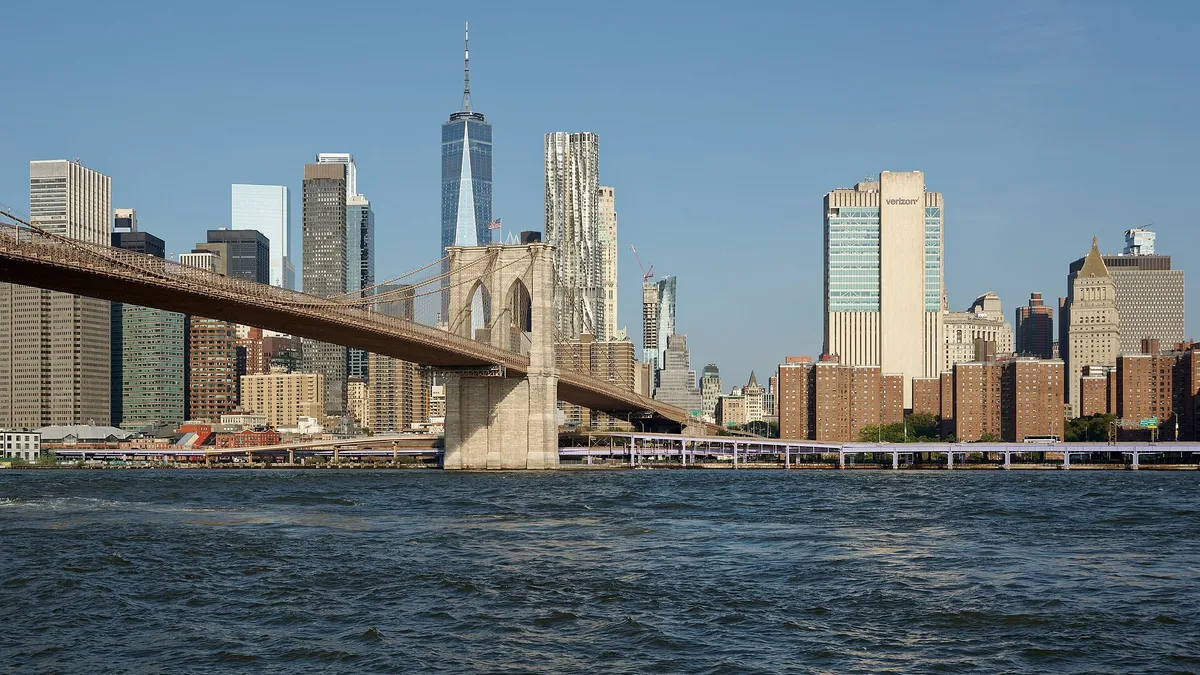
Walk across Brooklyn Bridge, ideally early in the morning, then head down to DUMBO for the famous view of the Manhattan Bridge. Stroll along the Brooklyn Heights Promenade and through Williamsburg, for its shops and bars.
The High Line and Chelsea
A former elevated railway turned into a hanging garden, the High Line runs through Chelsea, from Chelsea Market to Hudson Yards. A unique, free walk between art galleries and architecture.
Eating in New York
Pizza by the slice, bagels, pastrami at a deli, cheesecake, food from all over the world in Chinatown or Queens: New York is for tasting as much as sightseeing. Food halls are handy for trying a bit of everything.
Getting around
The subway runs day and night; contactless payment by card or phone works at the turnstiles. Walk as much as you can: it’s the best way to discover the neighbourhoods. From the airports, a private transfer takes you straight to your hotel.
Where to stay in New York
Midtown for a first visit, the Upper West Side with kids, the Village as a couple, Brooklyn or Long Island City on a tighter budget: every area is detailed in our guide Where to stay in New York.
Frequently asked questions
How many days do you need in New York?
Five days let you see the essentials of Manhattan (the Statue of Liberty, Central Park, one or two big museums, an observation deck, the downtown neighbourhoods) plus a walk in Brooklyn. A week gives you time to wander.
How can I see the Statue of Liberty for free?
The free Staten Island Ferry passes the Statue of Liberty and offers great views of Manhattan. To land on Liberty Island, you need the official paid ferry, best booked in advance.
Is a city pass worth it in New York?
It can be if you plan several paid attractions (observation decks, museums, cruises). Compare its price with the tickets you would actually buy.