Things to do in Marseille: the must-sees and our tips
Ideal for: CouplesFamiliesSoloOn a budget
Contents
In short: Marseille is all about the sea. Start with the Old Port (Vieux-Port), go up to Notre-Dame-de-la-Garde for the view, wander the lanes of Le Panier, visit the Mucem, then treat yourself to a day in the calanques or on the islands. The city is big: group your visits by area.
The Old Port
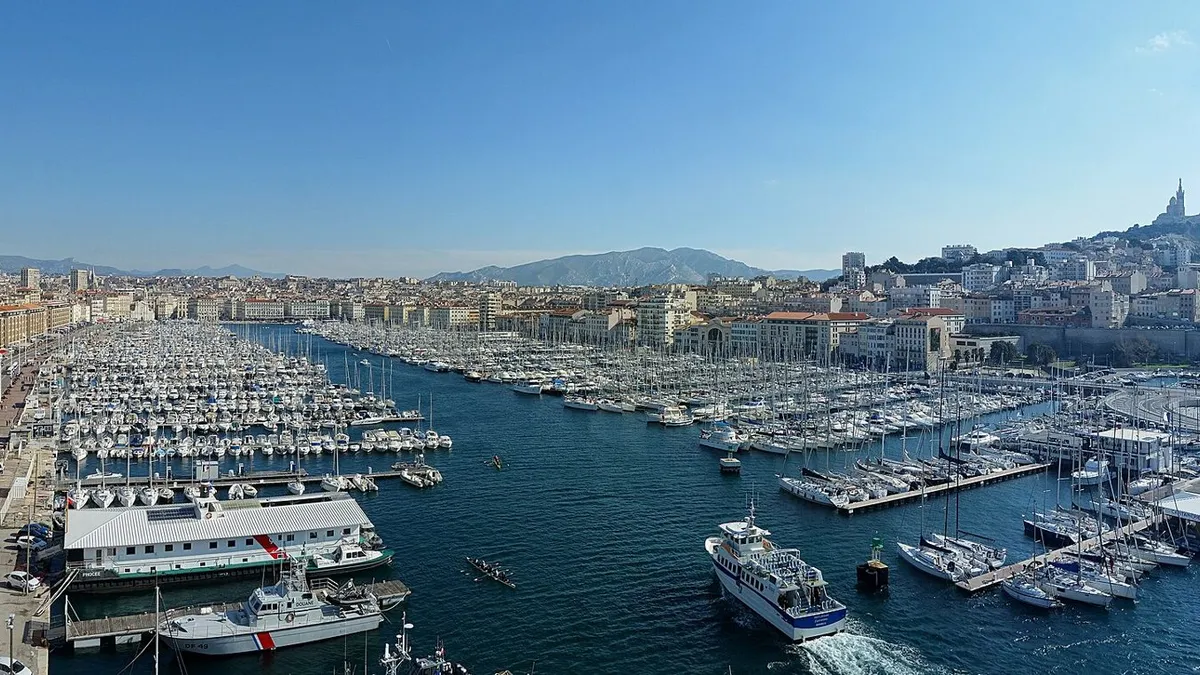
The historic heart of Marseille since Antiquity, the Old Port is where every visit begins. In the morning, the fish market sets up on the quay; the Ombrière, a huge suspended mirror, reflects the passers-by. Boats to the Château d’If, the Frioul islands and the calanques leave from here.
Notre-Dame-de-la-Garde
The “Bonne Mère” watches over the city from its hill. Its terrace offers the best view of Marseille, the sea and the islands. Walk up (it’s steep) or take the bus.
Le Panier
Marseille’s oldest district: sloping lanes, colourful façades, workshops and small squares. In the middle stands the Vieille Charité, a former almshouse now home to museums and exhibitions.
The Mucem and Fort Saint-Jean
At the entrance to the Old Port, the Mucem, dedicated to Mediterranean civilisations, is linked by a footbridge to Fort Saint-Jean. Its roof terraces offer a superb sea view, even without visiting the exhibitions.
The calanques
Between Marseille and Cassis, the Calanques National Park lines up white cliffs and turquoise coves. Explore them on foot, with good shoes and plenty of water, or by boat from the Old Port. Access is regulated: some calanques must be booked in summer, and the massifs close when there is a fire risk. Check the official National Park website before you go.
The Château d’If and the Frioul islands
The Château d’If, made famous by The Count of Monte Cristo, can be visited after a short crossing. The nearby Frioul islands offer coves and trails. Boats depend on the weather.
The Corniche and the Vallon des Auffes
The Corniche Kennedy runs along the sea to the south, with viewpoints and beaches. On the way, the Vallon des Auffes, a small fishing harbour hidden under a bridge, is one of the most photogenic spots in the city.
Cours Julien and local life
Street art, bars, bookshops and small music venues: the Cours Julien and its surrounding streets are Marseille’s creative district, ideal in the evening.
Eating in Marseille
Bouillabaisse, best enjoyed in a restaurant that makes it the traditional way; Marseille-style pizza, navettes (orange-blossom biscuits) and food from all around the Mediterranean.
Day trips from Marseille
- Cassis, its harbour and Cap Canaille.
- Aix-en-Provence, its fountains and the Cours Mirabeau.
- The Côte Bleue, to the west, and its small calanques.
Getting around
- Metro, trams and buses cover the city; Saint-Charles station is linked to the Old Port by metro.
- From the airport, Marseille-Provence, a shuttle bus runs to Saint-Charles station.
- In summer, set off early for the calanques: heat and crowds build up quickly.
For the rest of your trip: Travel in France.
Where to stay in Marseille
The Old Port for a first visit, Le Panier for charm, Cours Julien for a tighter budget and nightlife, Endoume and the Corniche for the sea. Every area is detailed in our guide Where to stay in Marseille.
Frequently asked questions
How many days do you need in Marseille?
Two days for the city (Old Port, Le Panier, Notre-Dame-de-la-Garde, the Mucem), and one more day for the calanques or the Frioul islands and the Château d'If.
Do you need to book to visit the calanques?
For some of them, yes: the Sugiton and Pierres Tombées calanques require a free booking on certain summer days, and the massifs can close when there is a fire risk. Check the official Calanques National Park website before you go.
How do you get to the Château d'If?
By boat, from the Old Port. Crossings depend on the weather: check departures on the day.
Related articles
Where to stay in Marseille: the best areas for your trip
Old Port, Le Panier, Cours Julien, the Corniche, La Joliette, Prado: where to stay in Marseille by the sea, near the calanques or the station.
Christmas markets in Europe: the best ones and our tips
Strasbourg, Munich, Brussels, Bruges, Berlin, Zurich, and Lyon's Festival of Lights: the best Christmas markets in Europe and our tips for visiting.
Things to do in Bordeaux: the must-sees and our tips
What to see and do in Bordeaux: Place de la Bourse and the water mirror, the quays, the Cité du Vin, Saint-Pierre, Chartrons, vineyards and the Dune du Pilat.